






A clean mattress is crucial for a healthy sleep environment. This guide covers step-by-step instructions, tips for different mattress types, stain removal methods, and prevention techniques to help your mattress last longer and stay fresh.
Maintaining a clean mattress is crucial for ensuring a healthy sleep environment. Over time, mattresses can accumulate a variety of unwanted substances, including allergens, sweat, dust mites, and bacteria. These factors can significantly impact your sleep quality and overall health. Regular cleaning not only enhances hygiene but also extends the lifespan of your mattress, allowing you to enjoy restful nights for years to come.
Learn more about when to replace your mattress.
Why Regular Mattress Cleaning Matters
Cleaning your mattress is not just a matter of aesthetics; it plays a vital role in your overall health and well-being. Dust mites, bacteria, and unpleasant odors can thrive in unclean mattresses, leading to various health issues. Research indicates that a typical mattress can harbor millions of dust mites, which can trigger allergies and respiratory problems.
Moreover, a clean mattress contributes to better sleep quality. When you sleep on a fresh, sanitized surface, you are less likely to experience discomfort or disturbances caused by allergens or odors. Regular cleaning can also prolong the life of your mattress, saving you money in the long run. Studies suggest that mattresses should be cleaned at least every six months to maintain optimal hygiene and comfort.
For tips on how often to wash your bed sheets, check our detailed guide.
What You’ll Need Before You Start
Before diving into the cleaning process, gather the necessary supplies to make the task easier and more efficient. Here’s a list of items you’ll need:
- Vacuum Cleaner: A vacuum with an upholstery attachment is ideal for removing dust and debris.
- Baking Soda: This versatile ingredient helps absorb odors and moisture.
- Mild Detergent: A gentle soap is effective for spot cleaning stains.
- Enzyme Cleaner: Useful for breaking down biological stains like urine or sweat.
- Clean Cloths: Microfiber cloths work best for wiping surfaces.
- Spray Bottle: For mixing and applying cleaning solutions.
Additionally, strip your bed linens and wash them separately to ensure a thorough cleaning process.
Step-by-Step Guide: How to Clean a Mattress
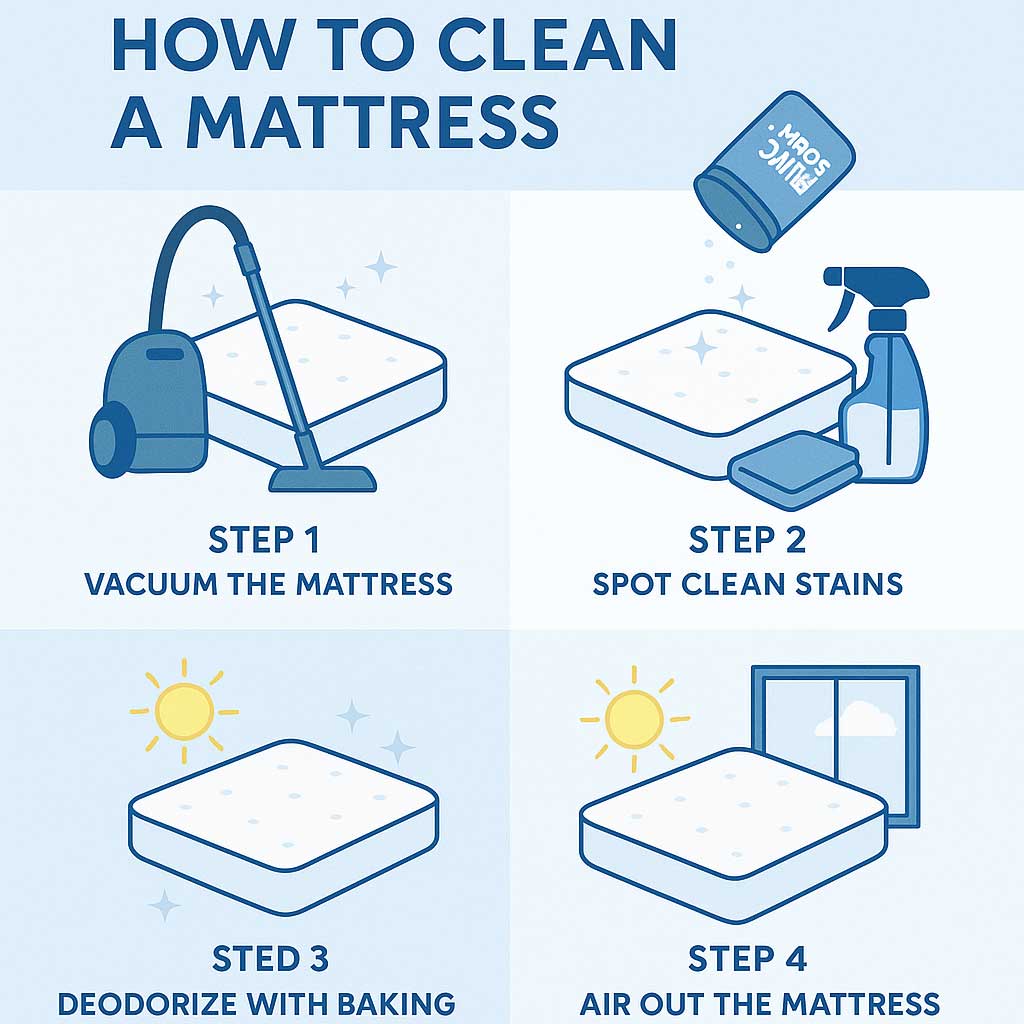
Cleaning your mattress can be broken down into a few simple steps. Follow this guide to ensure a thorough and effective cleaning process. Here’s a quick visual guide to the 4 essential steps of cleaning your mattress:
Step 1: Vacuum the Mattress
Begin by removing all bedding and linens from the mattress. Use a vacuum cleaner with an upholstery attachment to thoroughly vacuum the entire surface. Pay special attention to seams and crevices where dust and debris tend to accumulate. This step will help eliminate surface dirt, hair, and dust mites, creating a cleaner foundation for the next steps.
Step 2: Spot Clean Stains
Next, inspect your mattress for any stains. Common culprits include sweat, urine, blood, and food spills. For sweat stains, mix a small amount of mild detergent with water and gently dab the area with a clean cloth. For tougher stains, consider using an enzyme cleaner, which is particularly effective for biological stains. Apply the cleaner to a cloth and blot the stain, being careful not to oversaturate the mattress.
Step 3: Deodorize with Baking Soda
Once you’ve spot cleaned, it’s time to deodorize your mattress. Sprinkle a generous amount of baking soda evenly across the surface. Allow it to sit for several hours, or even overnight if possible. Baking soda works to absorb odors and moisture, leaving your mattress smelling fresh. After the designated time, vacuum the baking soda thoroughly to remove any residue.
Step 4: Air Out the Mattress
Finally, it’s essential to air out your mattress. If weather permits, place it outside in direct sunlight for a few hours. Sunlight helps eliminate bacteria and mold while also freshening the mattress. If outdoor airing isn’t an option, open windows in your bedroom to promote airflow and ventilation. For more details on healthy mattress placement, see our guide.
How to Remove Common Mattress Stains
Stains are an inevitable part of mattress life, but many can be effectively treated with the right approach. Here’s how to tackle some of the most common stains:
Sweat Stains
For sweat stains, a mixture of mild soap and water can work wonders. Gently dab the stained area with a cloth soaked in the solution, then blot with a dry cloth to remove excess moisture.
Urine Stains
To combat urine stains, create a paste using equal parts vinegar and baking soda. Apply the mixture to the stain and let it sit for about 30 minutes before blotting it away with a clean cloth.
Blood Stains
For blood stains, hydrogen peroxide is your best friend. Apply a small amount directly to the stain and gently scrub with a clean cloth. If the stain persists, an enzyme cleaner can also be effective.
Mold and Mildew
If you notice mold or mildew, mix a very light solution of vinegar and water. Lightly spray the affected area and allow it to air dry completely. Ensure the mattress is in a well-ventilated area to prevent further moisture buildup.
Tips for Different Mattress Types
Different mattress materials require specific cleaning methods to avoid damage. Here’s how to care for various types:
Memory Foam
Memory foam mattresses should be cleaned with minimal liquid to prevent soaking. Use a damp cloth with a mild detergent for spot cleaning, and avoid steam cleaning as it can damage the foam.
Innerspring/Hybrid
For innerspring or hybrid mattresses, focus on cleaning the top layer. Use a vacuum and spot clean stains as needed, but be cautious not to oversaturate the mattress.
Latex Mattresses
Latex mattresses should only be spot cleaned. Use a damp cloth with a mild detergent and avoid soaking the mattress, as excess moisture can lead to mold growth.
Preventing Future Stains & Odors
Taking proactive measures can help keep your mattress clean and fresh for longer. Here are some tips:
- Use a Waterproof Mattress Protector: This barrier helps shield your mattress from spills, sweat, and allergens.
- Rotate or Flip Your Mattress Regularly: Doing this every few months can help prevent uneven wear and prolong the life of your mattress.
- Vacuum Monthly: Regular vacuuming helps remove dust and allergens before they accumulate.
- Air It Out Occasionally: Allowing your mattress to breathe can help reduce moisture buildup and odors.
For more details, check our guide on using a mattress protector.
When Cleaning Isn’t Enough
Despite your best efforts, there may come a time when cleaning isn’t sufficient. Here are some signs that it might be time to replace your mattress:
- Sagging: If your mattress has noticeable dips or sagging areas, it may no longer provide adequate support.
- Persistent Odors: Lingering smells that don’t dissipate after cleaning can indicate deeper issues.
- Allergies: If you experience increased allergy symptoms, it may be due to allergens trapped in your mattress.
On average, mattresses should be replaced every 7 to 10 years, depending on usage and care.
Read more about disadvantages of cheap mattresses and how long mattresses last. On average, mattresses should be replaced every 7 to 10 years.
Conclusion
A clean mattress is essential for better health and improved sleep quality. By following a regular cleaning routine and addressing stains promptly, you can create a healthier sleep environment. Remember to clean your mattress at least twice a year and take preventive measures. to keep it fresh. Your body will thank you for it!
Protect your investment with a quality mattress and accessories. For questions, feel free to contact us.
Key Takeaways
- Clean your mattress every 6 months.
- Vacuum, spot clean, deodorize, and air out are the 4 main steps.
- Use different methods depending on mattress material.
- Baking soda and enzyme cleaners are your best allies.
- Protect your investment with a waterproof cover and regular maintenance.
FAQ Section
Q: How often should you clean a mattress?
A: It’s recommended to clean your mattress every six months to maintain hygiene and prolong its lifespan.
Q: Can you steam clean a mattress?
A: Yes, steam cleaning can be effective, but ensure your mattress is compatible with this method and allow it to dry thoroughly afterward.
Q: What’s the best way to remove urine stains?
A: A mixture of vinegar and baking soda is effective for removing urine stains. Apply the mixture, let it sit, and then blot it away.
Q: Can baking soda really remove odors?
A: Absolutely! Baking soda is a natural deodorizer that absorbs odors effectively, making it a great choice for freshening up your mattress.
By following these guidelines, you can ensure your mattress remains a clean and comfortable place for restful sleep. For more mattress tips and products, visit Mattress Mart.